PR and 1RM trends
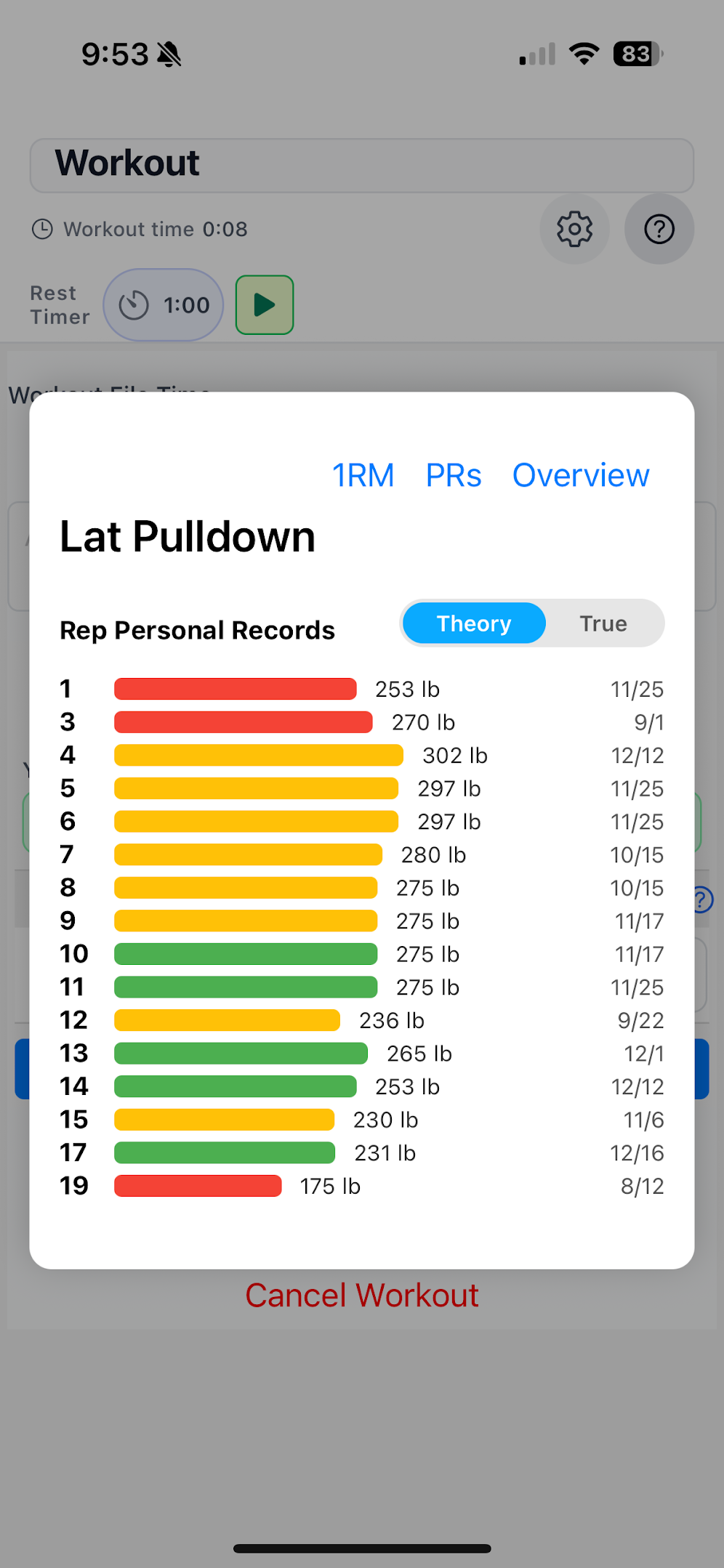
See rep PRs and estimated one-rep max movement so progress is visible even when the bar weight stays the same.
Progressive overload tracker
A useful progressive overload tracker should show whether you improved through load, reps, effort, estimated strength, volume, or consistency. Totality keeps those signals together.
 Scan for iOS

 Scan for Android

What it helps with
See rep PRs and estimated one-rep max movement so progress is visible even when the bar weight stays the same.
Use RIR and RPE to separate harder training from stronger performance.
Compare workload, effort, and intensity before deciding whether to push load, reps, or recovery.
Decision signals
| Need | Why it matters | How Totality handles it |
|---|---|---|
| Beyond add-weight rules | Intermediate lifters often progress through reps, effort, technique, or volume before load jumps. | Shows PRs, estimated 1RM, volume, RIR, RPE, and intensity in one training history. |
| Editable targets | Automatic suggestions can be wrong when fatigue or technique changes. | Keeps suggestions and logged values editable so the lifter stays in control. |
| Block-level view | One workout is noisy. Trends across weeks are more useful for programming decisions. | Connects exercise history with weekly volume, PRs, and estimated strength trends. |
FAQ
No. Progressive overload can also be more reps, better technique, lower effort at the same workload, more useful volume, or a higher estimated 1RM.
RIR helps explain effort. The same weight and reps at RIR 3 is not the same signal as the same set taken to failure.
Totality provides training context and suggestions, but keeps the target editable because fatigue, soreness, and technique still matter.
Related reading
Free tool
Estimate one-rep max, RIR-adjusted strength, and target training loads without opening the app.
Progressive overload
What to look for in a workout app that helps you add weight, reps, and volume at the right time without turning progression into guesswork.
Calculation guide
A plain-English breakdown of the 1RM and RIR math behind exercise suggestions, where it helps, where it breaks, and how feedback can motivate better sessions.