Fractional set contribution
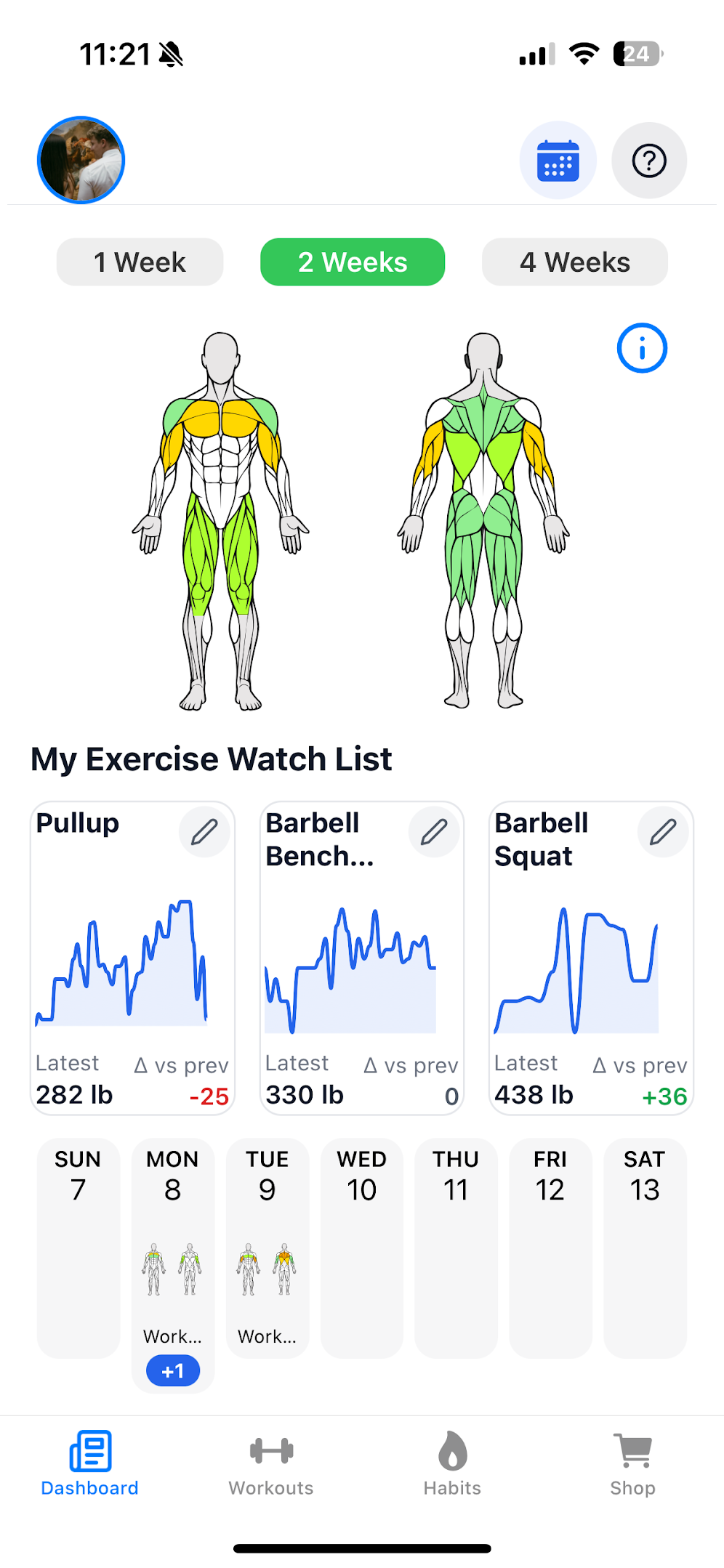
Compound lifts can distribute work across muscles instead of pretending every involved muscle received a full set.
Muscle volume tracker
Totality turns completed sets into per-muscle volume estimates, then keeps volume connected to effort, frequency, intensity, PRs, and exercise selection.
 Scan for iOS

 Scan for Android

What it helps with
Compound lifts can distribute work across muscles instead of pretending every involved muscle received a full set.
Average weekly muscle volume helps lifters compare training blocks and spot undertrained areas.
Read volume alongside RIR, RPE, intensity, PRs, estimated 1RM, and notes before changing a plan.
Decision signals
| Need | Why it matters | How Totality handles it |
|---|---|---|
| Muscle-level distribution | Set count by exercise can hide which muscles actually received useful work. | Uses exercise-level muscle distribution to estimate per-muscle volume. |
| Frequency | The same weekly volume can feel different when split across sessions or crammed into one day. | Pairs volume with weekly training context and calendar views. |
| Recovery context | More volume is not automatically better if intensity and fatigue are unmanaged. | Keeps volume near effort, intensity, PRs, habits, and notes. |
FAQ
A muscle volume tracker estimates how much work each muscle received across workouts, usually by counting sets or fractional set contribution.
Fractional volume is useful because compound lifts train multiple muscles with different levels of contribution.
No. Volume is useful, but it should be read with effort, intensity, frequency, exercise selection, recovery, and performance trends.
Related reading
Muscle volume
How Totality assigns set contribution by muscle, why compound lifts need nuance, and where muscle volume tracking helps or breaks down.
Workout analytics
A guide to the strength insights that matter after set volume: RIR, RPE, intensity, PRs, muscle distribution, frequency, and recovery context.
Progressive overload
For lifters deciding whether to add weight, reps, volume, or keep effort stable.